If you travel around China, you will see tea shops everywhere. They line busy streets and can also be found in small, quiet alleys. Tea is a big part of everyday life in China, and millions of people drink it every day.
In Henan Province, where Xinyang is located, you may notice the same name on the signs of many tea shops: Xinyang Maojian (pronounced roughly sheen-yahng mao-jyen). It is one of the best-known green teas from this region.
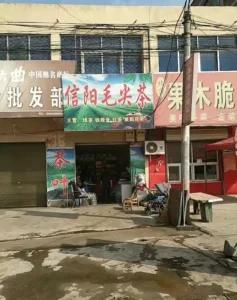
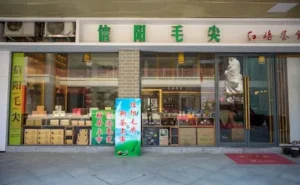

So, what is Xinyang Maojian? It is a well-known Chinese green tea from Xinyang, Henan Province.
This guide is for beginners. Instead of focusing on old stories and legends, we will look at practical questions: where the tea comes from, how it tastes, how to choose it, and how to brew and store it.
Table of Contents
- What Is Xinyang Maojian?
- Where Does Xinyang Maojian Come From?
- What Does Xinyang Maojian Taste Like?
- Origin Labels and Traditional Tea-Making
- When Is Xinyang Maojian Harvested?
- What Can Tea Color Tell You?
- How to Brew Xinyang Maojian
- How to Choose and Store the Tea
- Summary: Is Xinyang Maojian Right for You?
1. What is Xinyang Maojian? (Understanding the Name)
In In China, many famous teas are named after their place of origin, their appearance, or their style of production. A tea’s name does not always refer to a company or a single tea plant variety.
- Xinyang: A city in Henan Province, in central China. The surrounding region has hills, mountains, rivers, and tea-growing areas.
- Maojian: Literally, “hairy tips.” The name refers to the fine hairs found on young tea buds and leaves.
Xinyang Maojian is a type of green tea. The fresh leaves are processed to preserve their green character, then shaped and dried.
Other famous Chinese green teas include West Lake Longjing and Biluochun. Each has its own appearance, production methods, and typical flavor profile.
2. Where Does Xinyang Maojian Come From?
Not all tea from Xinyang can be called real Xinyang Maojian. According to the strict Chinese National Standard (GB/T 22737-2008), authentic Xinyang MXinyang Maojian is associated with Xinyang in Henan Province. Its geographical origin is an important part of the tea’s identity.
China has a national standard for the geographical indication product Xinyang Maojian tea: GB/T 22737-2008. The standard covers matters such as the protected origin, product requirements, grading, testing, labeling, packaging, and storage.
Not every tea sold in Xinyang is automatically covered by the geographical indication. When buying tea, it is worth checking the producer, product label, and available origin information rather than relying on the name alone.
Why Does the Growing Environment Matter?
Xinyang lies near 32° north latitude.
Discover the story of Latitude 32°N
The region’s hills, rainfall, seasonal fog, and spring temperatures help shape its tea-growing environment. These conditions, together with the tea plant variety, picking time, and processing method, can influence the final flavor.
However, latitude alone cannot guarantee good tea. Two teas grown in the same region can taste different because of differences in the leaves, processing, storage, and brewing.
3. What Does Xinyang Maojian Taste Like?
Some green teas taste bitter or strongly grassy, but Xinyang Maojian is famous for its balanced, sweet flavor.
- The Science of Sweetness: Spring tea leaves contain high levels of amino acids. When you brew the tea, these nutrients dissolve into the water in the first 60 seconds, giving you a smooth, sweet first sip.
- The “Hui Gan” (Sweet Aftertaste) Experience: Hui Gan is a special word in Chinese tea culture. It means the refreshing, sweet feeling that slowly comes back to your throat 10 to 20 seconds after you swallow the tea. Xinyang Maojian has one of the fastest and cleanest sweet aftertastes, making it perfect for beginners.
How it Compares to Other Chinese Green Teas:
- Xinyang Maojian: Fast sweet aftertaste, smooth, and lasts a long time.
- West Lake Longjing: Sweet right away when you drink it, but the aftertaste takes longer to arrive.
- Bi Luochun: Strong aroma at first, but the aftertaste fades quickly.
4. Origin Labels and Traditional Tea-Making
When choosing Xinyang Maojian, it helps to understand the difference between origin protection, cultural heritage, and awards.
Geographical Indication
China’s national standard GB/T 22737-2008 covers the geographical indication product Xinyang Maojian tea.
A geographical indication connects a product with a defined place and its applicable product requirements. However, seeing the words “Xinyang Maojian” on a package does not, by itself, prove that the tea has been independently verified.
Check the product label and ask the seller for supporting information when necessary.
Traditional Tea-Making
Traditional tea-making skills are an important part of China’s tea culture. Some tea-making techniques have also been recognized as intangible cultural heritage.
Cultural heritage recognition helps preserve traditional knowledge and skills. It is not the same as a food-safety certificate, and it does not guarantee that every product made using a traditional method will have the same quality.
What About Awards?
Xinyang Maojian has a long history of recognition in China. However, an award should be described with its correct name, date, organizer, and category.
A historical award does not automatically prove that every tea sold today is of the same quality. When discussing a particular award, it is best to link to a reliable record of the original event.
5. When Is Xinyang Maojian Harvested?
Harvest time can affect the taste, appearance, and price of green tea. In Xinyang, the spring harvest is especially important.
The exact picking dates change from year to year. Weather, altitude, tea plant variety, and local growing conditions all play a role.
Early Spring Tea
Tea picked early in the spring often has young leaves and a delicate flavor. Some early-picked teas are prized for their freshness and tender appearance.
They can also be more expensive, but an early harvest does not automatically mean better quality for every drinker.
Mid-Spring Tea
As the season progresses, the leaves develop further. Depending on the variety and processing method, the tea may have a fuller flavor and a different balance of freshness, aroma, and bitterness.
For everyday drinking, a well-made tea from this period may offer good value.
Later Spring Tea
Later-picked tea may have a stronger or more pronounced flavor. Its character depends on the leaves, growing conditions, and processing.
It is not necessarily suitable for repeated brewing simply because it was harvested later.
What About Qingming and Guyu?
Qingming and Guyu are traditional markers in the Chinese spring calendar. Tea sellers sometimes use them to describe harvest periods.
However, the dates of the actual harvest are not fixed by these calendar terms alone. If you are buying a particular tea, ask when it was picked and what kind of leaves were used.
6. What Can Tea Color Tell You?
Photos and videos can make tea color look like a simple test of quality. In reality, color is only one part of the picture.
Should the Tea Be Clear or Cloudy?
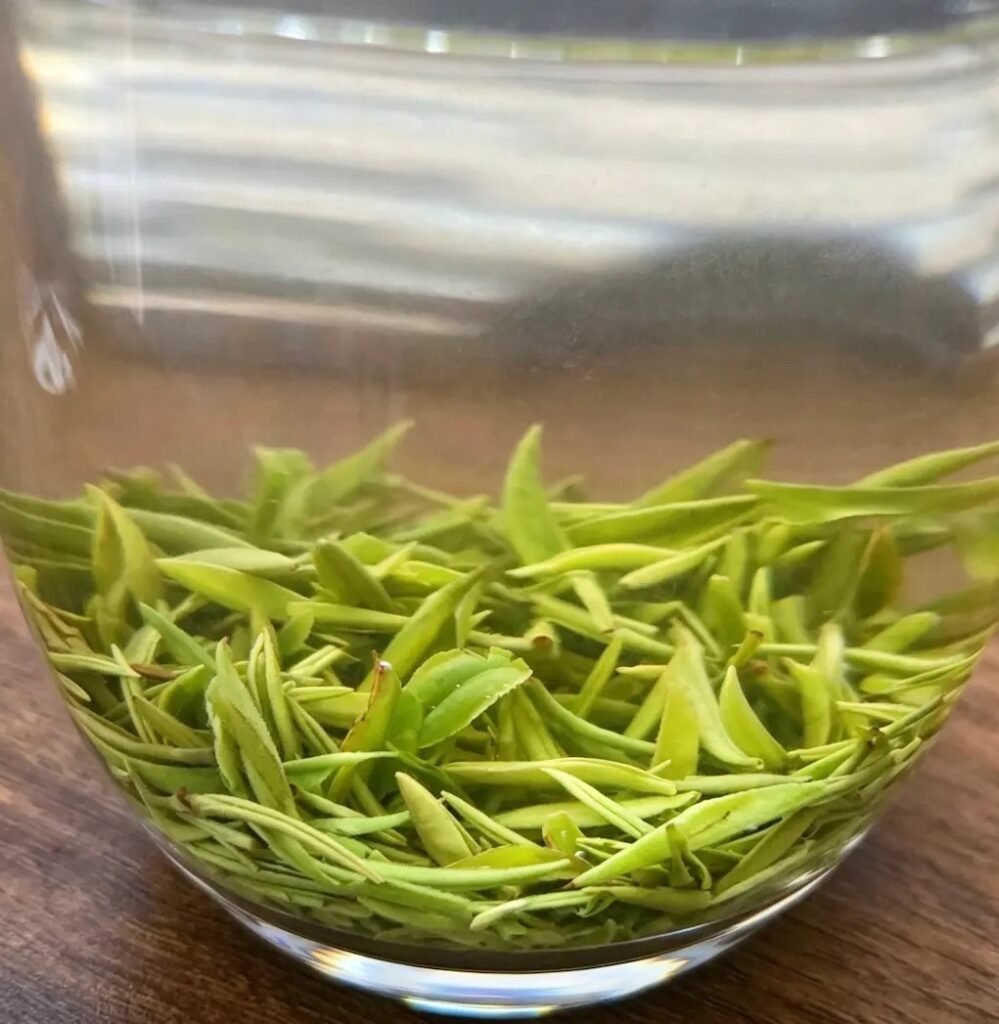
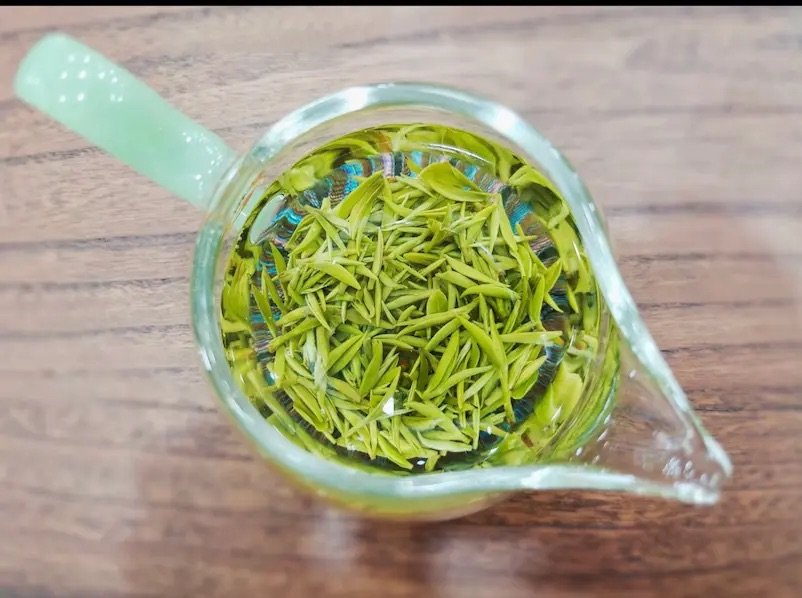
A well-brewed cup of Xinyang Maojian may look clear and bright, with a color ranging from pale yellow-green to a deeper yellow-green.
The exact appearance depends on the tea and the brewing method. Fine particles or tiny hairs from the leaves may also affect the clarity.
A cloudy cup does not automatically mean the tea is fake or poorly processed. It may be related to the leaves, fine particles, water, or brewing conditions.
If the tea has an unusual smell, visible signs of spoilage, or other reasons to raise concern, do not rely on color alone to judge whether it is safe to drink.
Do More White Hairs Mean Better Tea?
Not necessarily.
Fine white hairs are a natural feature of young tea buds and leaves. Their amount and appearance can offer clues about the leaf material, but they are not a complete quality test.
When evaluating tea, consider several things together:
- The appearance and condition of the dry leaves.
- The aroma of the dry leaves and brewed tea.
- The flavor and aftertaste.
- The appearance and condition of the leaves after brewing.
- The product’s origin, processing information, and storage history.
No single visual sign can tell you everything about a tea’s quality.
7. How to Brew Xinyang Maojian
There is no single brewing time that works best for every Xinyang Maojian. Water temperature, leaf quantity, and steeping time all affect the taste.
Here is a simple starting point for beginners.
Start with These Brewing Settings
- Tea: About 3 grams.
- Water: About 200 ml.
- Water temperature: Around 75–80°C.
- First steep: Try 60–90 seconds.
- Adjust: If the tea tastes too strong or bitter, use cooler water, fewer leaves, or a shorter steep next time.
These are starting points, not strict rules. Different teas may need different settings.
Why Does Water Temperature Matter?
Tea leaves contain many compounds that dissolve into water at different rates. Temperature and steeping time influence how much of these compounds enters your cup.
For green tea, slightly cooler water can help produce a gentler taste. Hotter water or longer steeping may create a stronger cup, but can also bring out more bitterness and astringency.
The 60-second mark is not a scientific boundary between sweetness and bitterness. It is simply one possible starting point for experimenting with your tea.
Can You Brew the Leaves More Than Once?
Yes. Many loose-leaf green teas can be brewed more than once, although the flavor may change with each infusion.
After the first steep, try a second infusion and see how the aroma, strength, and aftertaste change. You may need to adjust the time.
A Note on Caffeine
Xinyang Maojian is a caffeinated tea. The amount of caffeine in a cup varies with the leaves, the quantity used, water temperature, and steeping time.
If you are sensitive to caffeine, consider drinking less, choosing a weaker brew, or avoiding tea close to bedtime. If tea bothers your stomach when you drink it on an empty stomach, try having it with food.
8. How to Choose and Store the Tea
A Quick Shopping Checklist
| What to Check | What to Look For |
|---|---|
| Dry leaves | Look for a reasonably consistent appearance and no obvious signs of moisture damage or foreign material. |
| Color | Color varies by tea and processing. Do not judge quality by color alone. |
| Aroma | Look for a fresh, pleasant tea aroma without musty or other unpleasant smells. |
| Brewed tea | Notice the aroma, taste, bitterness, astringency, and aftertaste. |
| Product information | Check the producer, origin details, packaging date, storage advice, and available quality records. |
| Price | Compare the tea’s origin, grade, harvest time, packaging, and supporting information rather than price alone. |
A photo or visual inspection cannot confirm the tea’s full quality or food safety. When safety matters, reliable sourcing and appropriate testing are more useful than appearance alone.
How to Store Green Tea
Green tea gradually loses freshness when exposed to heat, light, air, moisture, and strong odors.
For everyday storage:
- Keep the tea in a clean, airtight container.
- Store it in a cool, dark, dry place.
- Keep it away from strong-smelling foods.
- Close the package promptly after use.
For longer storage, refrigeration or freezing may help preserve freshness if the tea is sealed well against moisture and odors. Before opening a cold package, allow it to return to room temperature while still sealed. This helps prevent condensation from forming on the leaves.
Buy an amount you can use while the tea is still fresh. Even when stored carefully, green tea gradually changes over time.
Summary: Is Xinyang Maojian Right for You?
Xinyang Maojian may be worth trying if you enjoy green tea with a fresh aroma, a lively taste, and a range of flavors that can include vegetal, nutty, or sweet notes.
It may appeal to beginners, but it is not guaranteed to taste sweet or free of bitterness. Your experience will depend on the tea you choose and how you brew it.
If you are new to Chinese green tea, start with a small amount. Brew it gently, taste it carefully, and adjust the method to suit your preferences.
Xinyang Maojian is more than a name on a tea package. Its story connects the local environment, tea plants, production skills, and the people who make and drink it.
The best way to understand it is to learn about its origin, look for reliable product information, and taste it for yourself.