Welcome to Xinyang Sourcing.
This is your simple, quiet introduction to Xinyang Maojian — the fresh spring green tea grown in the Dabie Mountains.
There are thousands of web‑pages online. It feels wonderful to connect with you here. Whether you found us by chance or searched for tea out of interest, we share the same love for natural leaf tea.
We meet over spring tea grown in mountain lands.
If you are new to this northern Chinese tea, this guide will help you understand what makes it different, and how to enjoy it for the very first time.
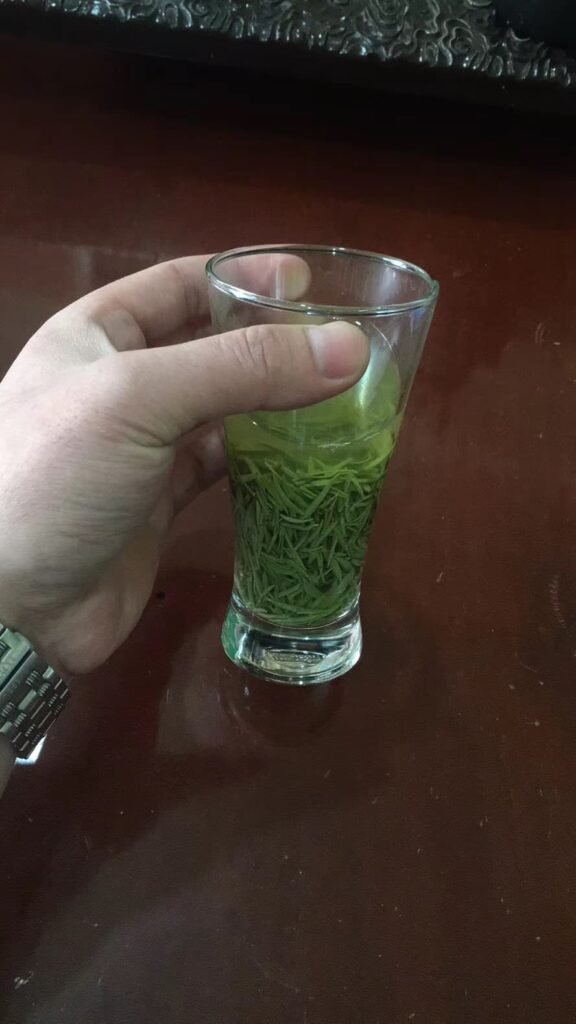
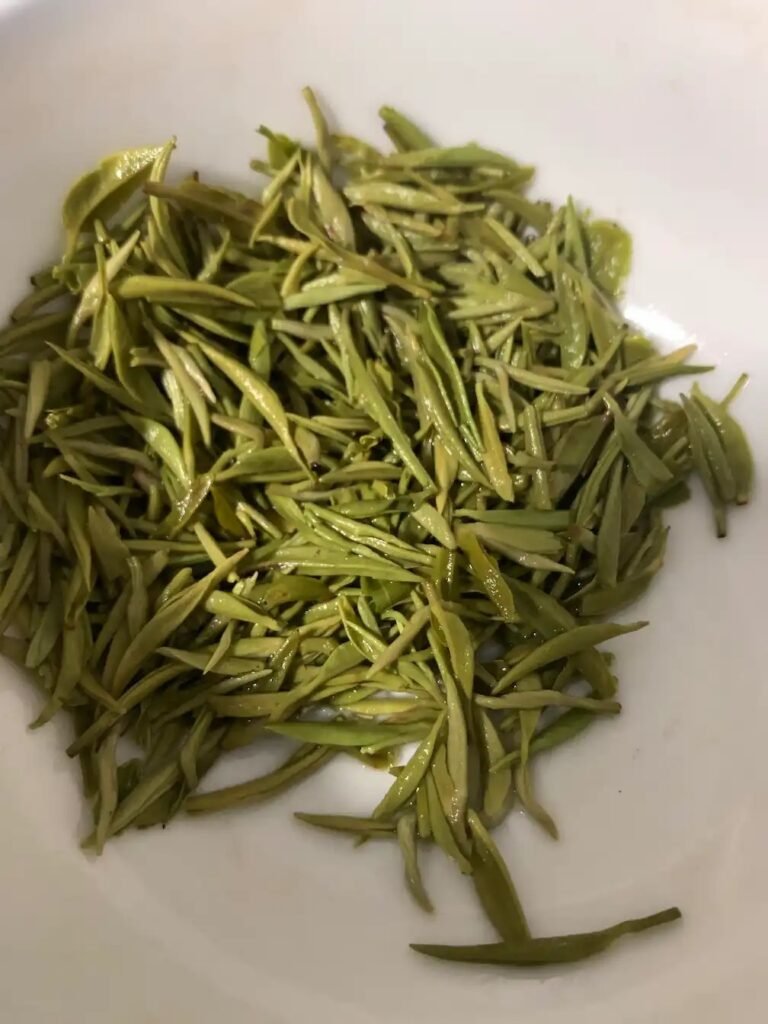
If you mostly drink easy tea‑bags, or you are new to whole‑leaf Chinese tea, you will get to know Xinyang Maojian today. It is a classic green tea from China, with very special mountain flavours.
It offers a one‑of‑a‑kind taste, texture and terroir.
Special mountain home at 32° North latitude
Look at a world map. Most land along latitude 32°N is dry desert and hot zones. These places are not good for growing fine, tender tea plants.
Only the Dabie Mountains near Xinyang in Henan, China, form a rare green oasis on this latitude.
The mountains sit at a good height. Cloud and mist often cover the hills. Days and nights have quite different temperatures. Rocky mountain soil drains water well and holds small helpful minerals.
Winters here are long and cold. Tea bushes rest for many months.
Tea plants in warmer southern Chinese areas grow fast. In Xinyang, cool weather makes tea shoots grow slowly. They build up lots of amino acids. The balance of bitter tea compounds stays gentle.
That gives Xinyang Maojian its key feature: it does not taste sharp or harsh. It carries soft natural sweetness.
People have valued this northern‑mountain tea for centuries. Since the Book of Tea in Tang Dynasty, Xinyang has been a key tea‑growing area in Huainan. For over one thousand years, it has been famous for sweet, high‑quality spring mountain tea.
Unique taste you will notice
Many common green teas taste of strong grass. They feel light but simple. Some grow too fast. They carry sharp bitterness and leave a dry feeling in your mouth.
Xinyang Maojian tastes different because of its well‑balanced natural compounds.
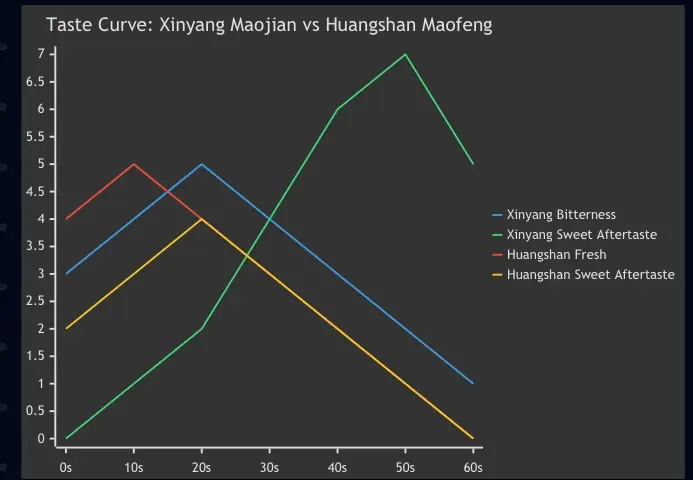
Long cold winters create high levels of amino acids. These make the tea feel smooth and soft to drink. It also has gentle caffeine and tea polyphenols. They give clean tea flavour and mild energy, without sharp bitter bites.
Many tea drinkers try green teas from different places and feel the clear difference. This tea does not have strong grassy notes or harsh dryness.
When you drink it, the taste feels fresh and clean. A gentle chestnut sweetness comes through. After you swallow, a soft sweet feeling stays inside your mouth.
For your first cup, you will taste pure fresh spring plant scent plus warm sweet chestnut notes. No strange or sharp flavours. It is calm, pleasant spring‑time tea.
New drinkers often wonder about the fine white fuzz on dry tea leaves. This soft white hair is not dirt. It grows naturally on very young spring buds. These young buds hold the richest plant nutrients. The fine fuzz helps create its soft smell and long‑lasting sweet after‑taste. More white fuzz usually means earlier harvest and more tender tea shoots.
Limited spring‑only tea
Xinyang Maojian is a special spring‑season tea. You can get its best flavour only for a short window each spring.
Tea bushes in the Dabie Mountains change as spring moves on. We can split top‑quality harvests into three simple spring groups. Each group has its own taste, sweetness and strength. As spring warms up slowly, tea plants wake and grow step by step.
- Early‑spring tea
Temperatures are still low. Shoots grow very slowly. Amino‑acid levels are at their highest. Lots of soft white fuzz covers buds. It tastes very sweet, almost no bitterness. This is the softest tea of the whole year. - Mid‑spring pre‑rain tea
The weather turns warmer. Tea shoots open evenly. Aromas become full, with clear chestnut notes. Sweet after‑taste lasts well. It balances sweetness and tea strength perfectly. Most new‑comers enjoy this style the most. - Late‑spring tea
Late spring brings higher temperatures. Tea bushes grow faster. Caffeine and polyphenol levels rise a little. The tea feels richer and gives more energy. Experienced tea lovers like this style for daily drinking. If you brew it with cooler water, bitterness stays low.
Once spring ends, summer brings fast plant growth. Tea can no longer make that soft sweet spring flavour. Every year’s spring harvest is a short, special gift from the mountains.
Now you know a little about Xinyang Maojian’s mountain home, taste and spring harvest rules.
You do not need to rush through your first cup. Do not make quick judgements right away.
We will walk you through the 32°N Dabie Mountain terroir, spring harvest timelines, traditional tea‑making steps and easy home brewing tips for new tea‑lovers.
Welcome to this quiet, special tea corner at 32° North.